British Columbia's vital forest sector is teetering on the brink of collapse, according to veteran industry leaders who are issuing an urgent plea for immediate policy changes from the provincial government.
A Veteran's Dire Warning
Peter Lister, executive director of the B.C. Truck Loggers Association, delivered a stark assessment at the group's annual convention in Vancouver. With over 35 years of experience, Lister stated he has never seen conditions this severe. "I've never seen it as bad... and it is really on the edge of collapse," he said, describing the industry as being in a "state of crisis."
The core of the problem lies in a dramatically shrunken timber harvest. Last year, forestry companies in B.C. logged only 32 million cubic metres of timber. This figure falls far short of the annual allowable cut of 45 million cubic metres, highlighting a significant underutilization of the resource.

Contractors Feeling the Squeeze
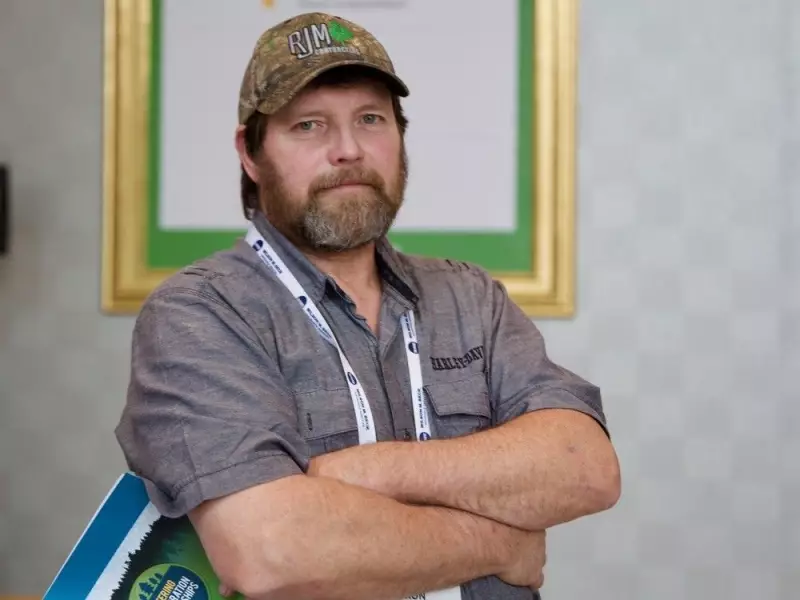
The crisis is felt acutely on the ground by logging contractors. Ron MacFarlane, owner of RJM Contracting on the Sunshine Coast, considers himself fortunate to have work for his eight-person crew until March, cutting second-growth Douglas fir. However, he describes the broader business climate as having "flatlined" and "definitely gone downhill in the last two years."
MacFarlane's ideal scenario would involve contracts spanning up to ten months a year, providing stability to attract and retain employees. Instead, he finds himself securing work for only five or six months, competing fiercely with other contractors for a shrinking pool of available timber. "Stumbling over the same amount of wood" with competitors, he said, encapsulates the struggle.
The past year was marked by widespread mill curtailments and closures, including the major blow of Domtar Corp.'s decision to close its pulp mill in Crofton.
Calls for Action and Glimmers of Hope
Industry leaders point to a critical bottleneck: the provincial permitting process. Lister argues that difficulties in speeding up permits to access more timber are a major controllable factor exacerbating the crisis. While acknowledging challenges beyond the government's control—such as punitive U.S. softwood lumber duties now averaging 45%—he urges Forest Minister Ravi Parmar to act decisively on domestic policy.
Minister Parmar, who spoke at the convention, pointed to a recent agreement with China to integrate modern wood construction into its building sector as a potential bright spot. The deal, unveiled during Prime Minister Mark Carney's trade mission to Beijing, aims to create "more jobs, more certainty and more stability for contractors and forestry workers in every corner of our province."
Parmar also promised concrete actions in the coming months. A key initiative will involve shifting from a slow, cut-block-by-cut-block permitting system to a more efficient area-based approach. This new system would be grounded in comprehensive land-use plans developed collaboratively by the government, industry, and First Nations.
The coming months will be critical in determining whether policy adjustments can provide the lifeline needed to pull B.C.'s historic forest industry back from the edge.