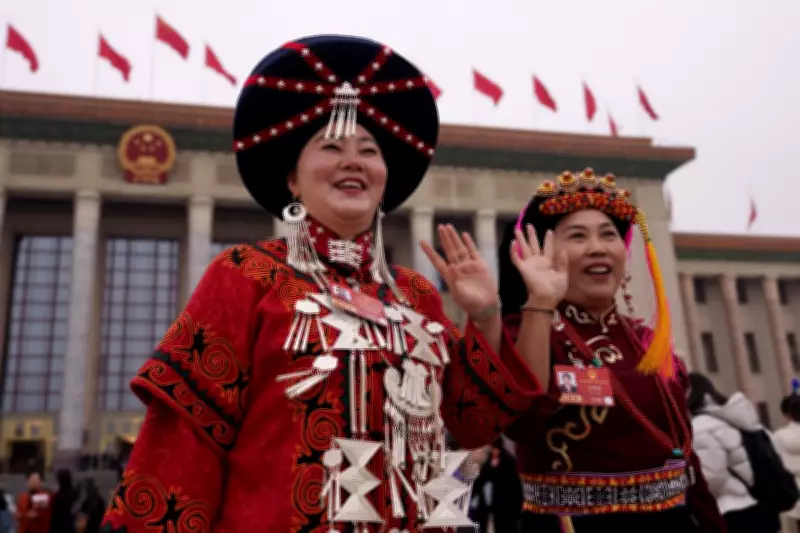
China has officially adopted a comprehensive ethnic unity law, a legislative move that has ignited significant controversy and drawn sharp criticism from human rights advocates and international observers. The law, which was passed by the National People's Congress, aims to promote national cohesion and social harmony among China's diverse ethnic populations. However, detractors contend that it will effectively cement assimilation policies, potentially undermining the cultural identities and rights of minority groups such as Tibetans, Uyghurs, and others.
Details of the Legislation
The new law mandates measures to foster unity among China's 56 officially recognized ethnic groups, emphasizing the importance of a shared national identity. It includes provisions for education, language use, and economic development that prioritize integration into the broader Han Chinese-dominated society. Supporters of the legislation argue that it is necessary to maintain stability and prevent separatist tendencies in regions like Xinjiang and Tibet, where ethnic tensions have historically been high.
Critics' Perspectives
Critics, including human rights organizations and some foreign governments, have voiced strong opposition, labeling the law as a tool for forced assimilation. They point to existing policies in Xinjiang, where Uyghurs and other Muslim minorities have faced mass internment and surveillance, as a precedent for how such laws can be used to suppress cultural and religious practices. The legislation is seen as part of a broader pattern of tightening control over minority regions, raising concerns about violations of international human rights standards.

International Reactions
The international community has responded with mixed reactions. While some countries have expressed support for China's efforts to maintain unity, others have condemned the law as a step backward for minority rights. The United Nations and various human rights groups have called for greater transparency and dialogue to ensure that the law does not lead to further marginalization of ethnic communities.
Historical and Cultural Context
China has a long history of managing its multi-ethnic population through policies that balance unity with diversity. Previous initiatives, such as the regional autonomy system, have granted certain rights to minority areas, but critics argue that these have often been overshadowed by assimilationist pressures. The new law is viewed by some as a formalization of these trends, potentially eroding the cultural heritage and languages of minority groups in favor of a homogenized national identity.
Potential Impacts
If enforced strictly, the ethnic unity law could have far-reaching consequences. It may lead to increased surveillance and restrictions on minority cultural expressions, such as language education and religious practices. Economically, it could prioritize development projects that benefit the majority Han population at the expense of local communities. Socially, it might exacerbate tensions and lead to further alienation of minority groups, contrary to its stated goals of harmony.
As China moves forward with implementing this law, the world will be watching closely to see how it affects the lives of millions of ethnic minorities. The debate over assimilation versus integration continues to be a contentious issue, with significant implications for human rights and global diplomacy.