South Korean Intelligence Agency Assesses Kim Jong Un's Daughter as Probable Successor
In a significant development regarding North Korea's future leadership, South Korea's primary spy agency, the National Intelligence Service (NIS), has stated that it is fair to consider the teenage daughter of North Korean leader Kim Jong Un as his heir apparent. This assessment follows her increased visibility in state media and official events, which analysts interpret as a deliberate grooming process for eventual succession.
Public Appearances Signal Political Preparation
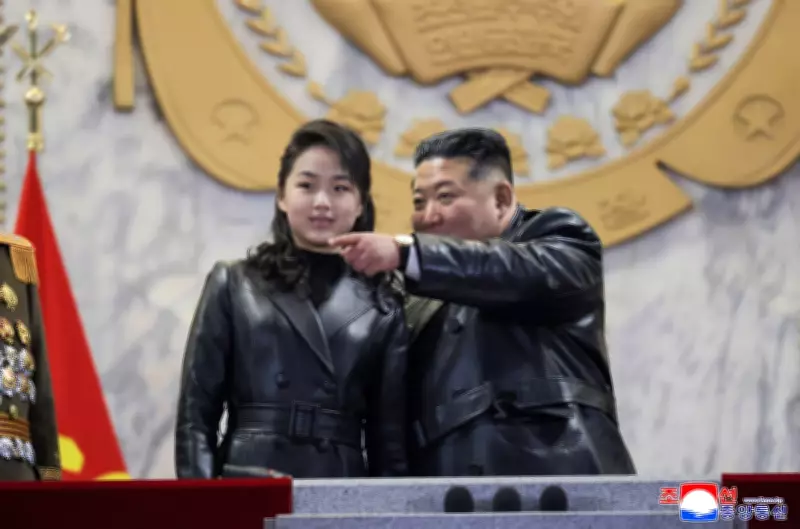
The daughter, whose name has not been officially disclosed by North Korean authorities but is believed to be Kim Ju Ae, has been prominently featured alongside her father in recent years. Most notably, she appeared with Kim Jong Un during a major military parade in Pyongyang on February 25, 2026, marking the conclusion of the Workers' Party congress. This event, documented by the state-run Korean Central News Agency (KCNA), showed her in a position of honor, sparking widespread speculation about her political future.
Independent journalists were not granted access to cover the parade, and the imagery distributed by North Korea's government cannot be independently verified. The photographs bore a KCNA watermark, consistent with the regime's controlled media environment. Such curated appearances are typical of North Korea's leadership presentation, where visual symbolism often carries profound political meaning.

Analytical Context and Historical Precedents
South Korean intelligence officials base their evaluation on patterns observed in North Korean dynastic politics. The Kim family has ruled the isolated nation for three generations, with power transfers typically involving careful preparation and public introduction of the successor. Kim Jong Un himself was gradually introduced before formally assuming power after his father's death in 2011.
The NIS's statement represents a formal acknowledgment of what many Korea watchers have suspected: that Kim Jong Un is following a similar playbook by elevating his daughter's profile. While North Korea has not made any official declaration regarding succession, the systematic inclusion of his daughter in high-profile events suggests a strategic effort to legitimize her as a future leader in the eyes of the elite and populace.
Implications for Regional Stability and Diplomacy
This potential succession plan carries substantial implications for Northeast Asian security dynamics. A hereditary transition would reinforce the Kim dynasty's grip on power, likely continuing existing policies of nuclear development and military-first politics. However, it also introduces uncertainties, as a younger, less-experienced leader could face internal challenges or pursue different strategic directions.
International observers are closely monitoring these developments, as leadership stability in North Korea directly affects diplomatic efforts, denuclearization negotiations, and humanitarian concerns. The South Korean intelligence assessment underscores the importance of understanding Pyongyang's internal dynamics, even as concrete information remains scarce due to the regime's opacity.
As the situation evolves, analysts will watch for further signs of institutional backing for Kim's daughter, such as official titles or expanded roles in party or military affairs. For now, the NIS's conclusion that she is being positioned as heir offers a crucial insight into one of the world's most secretive political systems.