Trump Escalates Rhetoric Against Iran as Naval Forces Deploy to Region
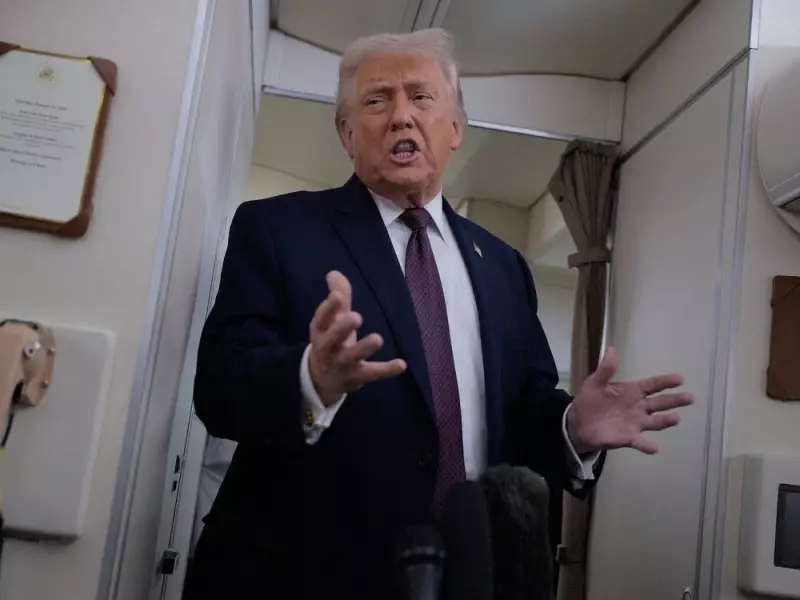
President Donald Trump has revived his threats of military action against Iran's senior leadership, coinciding with a violent government crackdown on nationwide protests that have shaken the Islamic Republic. In a significant escalation of tensions, Trump announced late Thursday that an armada of U.S. Navy vessels is currently en route to the Middle East, marking a renewed show of force against Tehran.
Naval Deployment and Presidential Warnings
Speaking to reporters aboard Air Force One while returning from Davos, Switzerland, Trump declared, "We have a big flotilla going in that direction and we'll see what happens." The president added, "I'd rather not see anything happen, but we're watching them very closely." This latest military movement represents a substantial deployment of American naval power to a region already experiencing heightened geopolitical instability.
The renewed warning follows Trump's recent decision to walk back a previous pledge to strike Iran after receiving assurances that the country wouldn't proceed with planned executions of hundreds of protesters. Tehran has issued its own warnings to both the United States and Israel, which conducted strikes on Iranian nuclear facilities last year, cautioning against any attempts to support the ongoing protest movement.

Contradictory Claims and Escalating Violence
Contrary to Trump's assertions that Iran was halting executions of political opponents, human rights organizations report that the number of casualties has surged dramatically during the government's protest crackdown. According to multiple sources monitoring the situation, the death toll continues to climb as rights groups work to verify suspected fatalities.
Mai Sato, the United Nations special rapporteur on human rights in Iran, told media outlets this week that civilian deaths are estimated at 5,000 or more, with reports from doctors within the country suggesting the figure could reach at least 20,000. Sato emphasized that these numbers have not been officially verified by the UN but represent concerning estimates from credible sources.
Documented Casualties and Arrests
The U.S.-based Human Rights Activist News Agency has documented the situation with specific figures, reporting that it has verified 5,002 deaths during the unrest that erupted in late December. The organization is currently reviewing an additional 9,787 suspected fatalities while confirming that more than 26,000 people have been arrested by Iranian authorities.
These protests represent the most significant challenge to Iran's ruling regime in decades, initially triggered in Tehran by a catastrophic collapse in the nation's currency before spreading nationwide. Demonstrators have increasingly called for an end to Supreme Leader Ayatollah Ali Khamenei's leadership, marking a profound political crisis for the Islamic Republic.
Regional Implications and International Response
The deployment of U.S. naval forces to the Middle East occurs against a backdrop of:
- Ongoing violent suppression of protests in Iran
- Previous military actions between Iran and Israel
- International concern about human rights violations
- Geopolitical tensions affecting global energy markets
This development represents another chapter in the volatile relationship between Washington and Tehran, with Trump's administration taking a consistently hardline approach toward the Iranian government. The situation continues to evolve as both sides monitor military movements and political developments within Iran's borders.