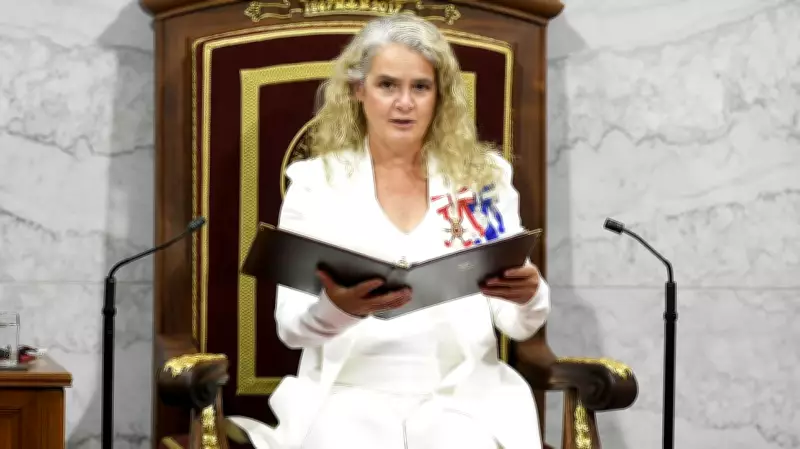
Julie Payette's Fall from Grace: Astronaut's Tumultuous Tenure as Governor General
It should have been a triumphant conclusion to an extraordinary career. Julie Payette, the pioneering astronaut who broke barriers in a male-dominated field, soared to become Canada's Governor General. Instead, her tenure ended in what she described as a "lynching"—a bitter departure marked by controversy and broken relationships.
A Stellar Career Meets Earthly Realities
Payette's achievements were nothing short of remarkable. She graduated summa cum laude from engineering school, excelled through rigorous space agency training, and completed two NASA missions to outer space. Her appointment as Governor General in 2017 appeared to crown these accomplishments with Canada's highest honorific office.
Yet almost immediately, problems emerged. Payette reportedly alienated senior officials in the Privy Council Office, created what was described as a toxic work environment for staff, and avoided her official residence at Rideau Hall except for mandatory functions. Her management style, effective in the competitive world of space exploration, proved disastrous for the ceremonial and diplomatic demands of the viceregal position.

The Unraveling of a Viceregal
By early 2021, the situation had deteriorated beyond repair. Prime Minister Justin Trudeau, who had enthusiastically appointed Payette just years earlier, informed her that her term was ending prematurely. She was succeeded by Chief Justice Richard Wagner as national administrator—an unusual constitutional arrangement that raised questions about the separation of powers.
"I was lynched," Payette told author John Fraser during a chance encounter at Massey College in 2023. "How else do you explain what I was supposed to do when the prime minister comes and tells me I have to go? I wasn't given a chance to have my own lawyer present."
Fraser, a former friend and master of Massey College where Payette had been a junior fellow, documented their strained relationship in his book The Governors General: An Intimate History of Canada's Highest Office. Their conversation revealed Payette's profound sense of betrayal and isolation.
Missed Opportunities and Cultural Disconnects
Perhaps most significantly, Payette failed to embrace what many considered the most important file of her tenure: Indigenous reconciliation. During events with Indigenous leaders, observers noted her visible discomfort and irritation. At one gathering featuring a sacred fire and traditional dance, her expression conveyed clear disdain for the proceedings.
This reluctance may have stemmed from cultural factors. As Fraser notes, reconciliation initiatives can challenge Quebec's historical narrative as a founding nation, potentially explaining why Payette—a Quebec native—avoided engaging deeply with Indigenous issues.
The Personal Cost of Public Failure
Payette's personal history complicated matters further. Media investigations revealed she had been involved in a fatal pedestrian accident and faced allegations involving her estranged husband—information that apparently went unexamined during the appointment process.
Her communication with Fraser reveals a woman struggling to understand her own role in the disaster. Despite Fraser's attempts to offer advice and support, Payette remained convinced she had been unfairly targeted by media and political establishments.
Contrasting Memories: From Space Hero to Viceregal Pariah
The tragedy is magnified by memories of Payette at her best. At Massey College, she had been celebrated as an inspiration—returning in her astronaut jumpsuit to dazzle students, bringing fellow space travelers for memorable dinners, and embodying the possibilities of determination and excellence.
Ursula Franklin, the celebrated physicist and Holocaust survivor, once called Payette and her colleagues "pathfinders" during a gathering where Payette radiated the confidence and achievement that had made her a national symbol.

Constitutional Concerns and Lasting Damage
Beyond personal drama, Payette's removal raised serious constitutional questions. The unprecedented manner of her departure—and the subsequent appointment of a Supreme Court justice as acting governor general—created potential conflicts should electoral or parliamentary crises require judicial review of viceregal decisions.
As Fraser observes, governors general maintain influence through clean reputations and ceremonial authority. By the time of her removal, Payette had lost both, damaging not only her own legacy but potentially the office itself.
Lessons from a Failed Appointment
The Payette experiment offers cautionary lessons about political appointments. Her technical brilliance and trailblazing spirit, while admirable, proved mismatched with the demands of symbolic leadership. The episode underscores that the highest offices require not just achievement but specific temperaments and understandings of institutional roles.
As Payette remains largely out of public view, her story serves as a complex study in how exceptional individuals can falter when placed in positions requiring different skills than those that brought them initial success. The woman who conquered space found herself earthbound by political realities she never fully comprehended.