Arkansas Governor's Restaurant Removal Sparks Political Firestorm
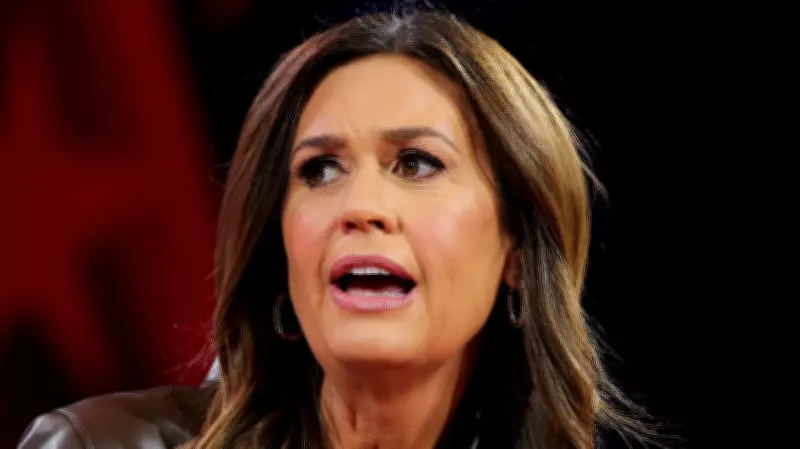
Arkansas Governor Sarah Huckabee Sanders has ignited a significant political controversy after being asked to leave a Little Rock dining establishment earlier this month. The Republican governor and former White House press secretary described the incident as evidence of a national battle between "normal versus crazy," while experts in public humanities suggest her response represents a calculated effort to control the narrative.
The Conflicting Accounts
During appearances on Fox News programs "Hannity" and "The Sunday Briefing," Sanders recounted being dining at The Croissanterie restaurant when the owner approached her security detail. According to Sanders, restaurant staff claimed her presence made employees feel "threatened," leading to her being asked to depart the premises.
"Last week I was having lunch with two other moms at a restaurant when the owner approached a member of the State Police Executive Protection Detail and said my presence made their employees feel threatened and told us to leave," Sanders wrote in a statement posted on X.

The restaurant, however, has presented a substantially different version of events. The Croissanterie disputed that anyone told Sanders employees felt "threatened," instead stating that guests and employees expressed feeling "uncomfortable" as her security presence became more noticeable.
Restaurant's Detailed Timeline
According to The Croissanterie's official statement, restaurant staff chose not to interrupt Sanders' meal initially. Approximately one hour into the governor's visit, employees approached her security detail to encourage Sanders to conclude her visit after finishing her meal.
"Beverages were offered to the party for the road. Nearly 30 minutes later, the party remained on the premises," the restaurant's statement continued. The establishment noted it maintains a 90-minute table seating limit and that "the security detail was approached a second time and asked to leave roughly 10 minutes before that time limit."
The restaurant also addressed allegations that an employee made an offensive hand gesture toward Sanders, clarifying that "the individual who made an inappropriate hand gesture was a customer ― not an employee ― and the matter has been addressed."
Sanders' Political Framing
In her media appearances, Sanders framed the incident as symbolic of broader national divisions. "It's no longer ... between the left and the right. Now our country is in a battle between what is normal versus what is crazy," she told "The Sunday Briefing" host Peter Doocy.
Sanders emphasized that she was already finished eating when approached and expressed confusion about the incident, describing herself as a "nice person" living in a "sad world." She added, "But I think that it gives us an opportunity to hold our heads high and show the normal. And I think that is the majority of Americans."
Expert Analysis of Narrative Control
Deepak Sarma, inaugural distinguished scholar in the public humanities at Case Western Reserve University, characterized Sanders' statements as a "blatant attempt to gaslight and hijack the narrative." Sarma noted the irony that "MAGA has been a small and borderline group that has commandeered the U.S. government and the media, and has claimed to speak on behalf of all Americans."
"When Sanders calls the clientele in the restaurant 'crazies' and a small minority, she is attempting to maintain the narrative that MAGA is the majority, when it is quite the opposite," Sarma told HuffPost.
Sarma also analyzed Sanders' specific word choices, suggesting that her mention of dining with "two other moms" represented "a blatant attempt to appeal to the MAGA base" and create "an imaginary narrative that she is" a regular person, despite her prominent political position.
Political Science Perspective
Conor M. Dowling, professor of political science at the University at Buffalo College of Arts and Sciences, observed that Sanders' response aligns with "a Republican Party narrative for the last decade or so which attempts to label the left as 'crazy' and 'too liberal' and 'out of touch.'"

Dowling noted that "the governor's response does not acknowledge that many Americans are experiencing anxiety and stress over some current national government policies" and that "according to the restaurant owners, those experiencing such anxiety and stress [include] some of their workers and patrons."
Conservative Media Reaction
The incident has drawn strong reactions from conservative media figures. Fox News co-host Rachel Campos-Duffy expressed outrage during a "Fox & Friends" segment, calling the restaurant's owners "tyrants" who aimed to "dehumanize" those with differing political ideologies.
Speaking about Campos-Duffy's remarks, Dowling noted that "dehumanization is a persistent political and social problem, and one that conservative politicians and pundits certainly also engage in."
Broader Implications
Sarma highlighted what he sees as hypocrisy in the situation, stating that "it's ironic that Sanders seeks sympathy for how she claims to have been treated," even as her "circle often dismisses or minimizes the suffering of others."
"The hypocrisy is palpable: MAGA pundits and others are attempting to switch the narrative so that they appear as the victims, and the actual victims are recast as the perpetrators," Sarma said.
The scholar also questioned Sanders' claim of supporting local businesses while potentially disrupting restaurant operations. "It is ironic that Sanders and other MAGA figures of her ilk claim to support local businesses but are blind to the disruption their presence might have caused and the space they occupied that could have gone to new paying customers," Sarma observed.
As the conflicting narratives continue to circulate, this incident has become a microcosm of larger political divisions, with both sides using the event to reinforce their broader messages about American society and political discourse.