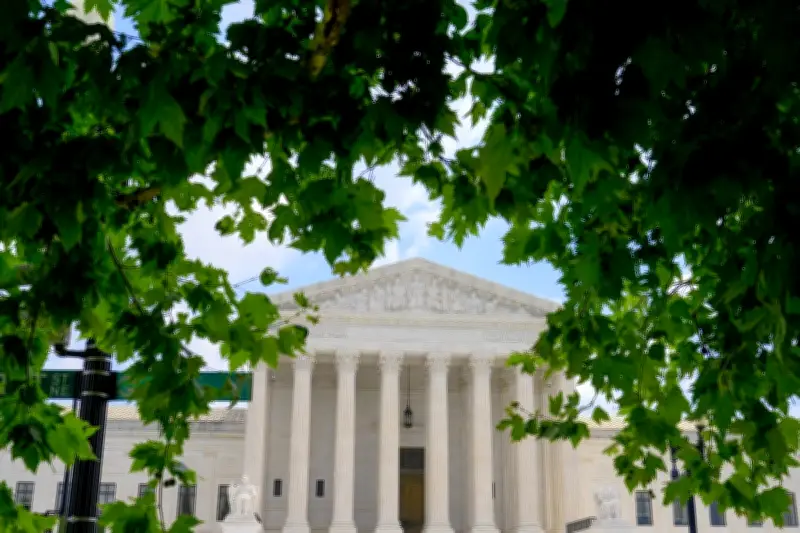
The U.S. Supreme Court on Monday upheld birthright citizenship, rejecting former President Donald Trump’s proposed limits in a landmark decision that affirms the constitutional right to citizenship for anyone born on American soil.
Ruling Details
The 6-3 decision, written by Chief Justice John Roberts, held that the 14th Amendment’s Citizenship Clause guarantees citizenship to all persons born in the United States, regardless of their parents’ immigration status. The ruling struck down an executive order Trump had proposed during his presidency that would have denied citizenship to children of undocumented immigrants and temporary visa holders.
“The text and history of the 14th Amendment are clear,” Roberts wrote for the majority. “Birthright citizenship is a cornerstone of American identity and law, and it cannot be undone by executive action.”

Impact and Reactions
The decision is a major victory for immigrant rights advocates and a setback for those who sought to restrict automatic citizenship. According to the Pew Research Center, approximately 250,000 children are born each year in the U.S. to undocumented parents, a figure that could have been affected by the proposed limits.
“This ruling reaffirms a fundamental principle: that all people born in this country are equal citizens,” said Omar Jadwat, director of the ACLU’s Immigrants’ Rights Project, in a statement. “The court has rejected an attempt to create a permanent underclass.”
Trump, who had made the issue a centerpiece of his immigration platform, criticized the decision on social media, calling it “a disaster for our country” and vowing to pursue a constitutional amendment to change the rule.
Legal Background
The case, United States v. Wong Kim Ark II, was brought by several states and immigrant rights groups after Trump’s 2025 executive order. The administration argued that the 14th Amendment’s phrase “subject to the jurisdiction thereof” excluded children of undocumented immigrants and temporary visitors. The Supreme Court disagreed, citing the 1898 precedent in United States v. Wong Kim Ark, which established birthright citizenship for children of non-citizens.
Justice Clarence Thomas, writing for the dissent, argued that the 14th Amendment’s original intent did not cover children of illegal immigrants. “The majority has ignored the plain meaning of the text and centuries of tradition,” he wrote.
What’s Next
The ruling is final and cannot be appealed, though legislative efforts to amend the Constitution could be pursued. However, such an amendment would require a two-thirds majority in both houses of Congress and ratification by three-fourths of states, a high bar unlikely to be met in the current political climate.
Birthright citizenship remains the law in the United States, as it has been for over a century, ensuring that all children born on American soil are automatically U.S. citizens.