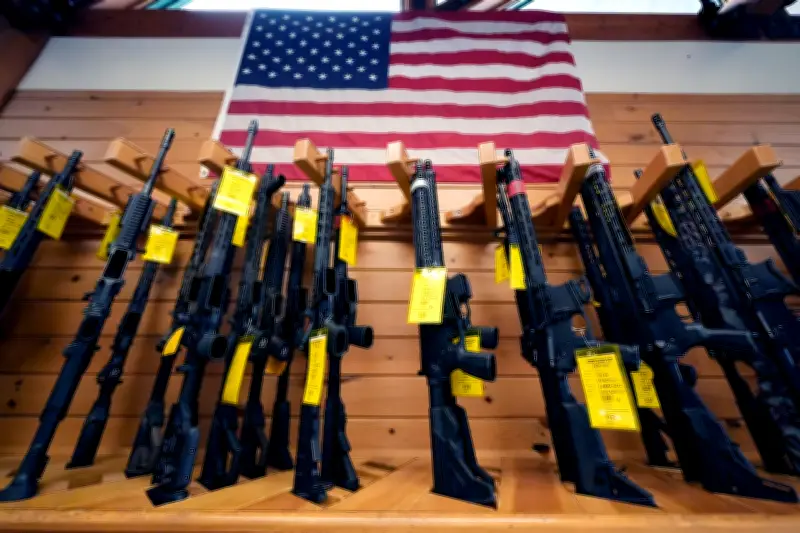
The U.S. Supreme Court announced on Tuesday that it will consider whether laws banning assault weapons violate the Second Amendment, taking on a case from Illinois that could have sweeping implications for gun regulations nationwide.
Case Background
The case challenges Illinois' 2023 ban on semi-automatic rifles and high-capacity magazines, which was enacted after a mass shooting at a July 4th parade in Highland Park that killed seven people. The law prohibits the sale, manufacture, and possession of certain firearms defined as assault weapons, including AR-15-style rifles.
Plaintiffs, including gun owners and firearms dealers, argue that the ban infringes on the right to keep and bear arms protected by the Second Amendment. Lower courts have upheld the law, citing historical precedent for regulating dangerous weapons.

Legal Significance
This marks the first time the Supreme Court will directly address the constitutionality of assault weapons bans since its 2022 ruling in New York State Rifle & Pistol Association v. Bruen, which established that gun laws must be consistent with the nation's historical tradition of firearm regulation. The Court has since applied that standard to strike down several state restrictions, including bans on firearm possession by individuals subject to domestic violence restraining orders and restrictions on carrying guns in public.
“The Court's decision to hear this case signals that it is ready to clarify the scope of the Second Amendment regarding modern firearms,” said legal analyst Sarah Johnson. “The outcome could either validate or invalidate similar bans in at least ten other states and the District of Columbia.”
Arguments
Supporters of the ban argue that assault weapons are uniquely lethal and have been used in many of the deadliest mass shootings in recent U.S. history. They contend that such weapons are not commonly used for self-defense and thus fall outside Second Amendment protection.
Opponents counter that AR-15-style rifles are among the most popular firearms in America, with millions owned by law-abiding citizens for sport, hunting, and home defense. They argue that the ban criminalizes possession of common firearms without sufficient justification.
Impact
The Supreme Court's ruling, expected by late June 2027, could set a national precedent. If the Court upholds the Illinois ban, other states may be emboldened to enact similar laws. If it strikes down the ban, existing assault weapons restrictions across the country could be invalidated. The case is likely to be one of the most closely watched gun rights disputes in decades.