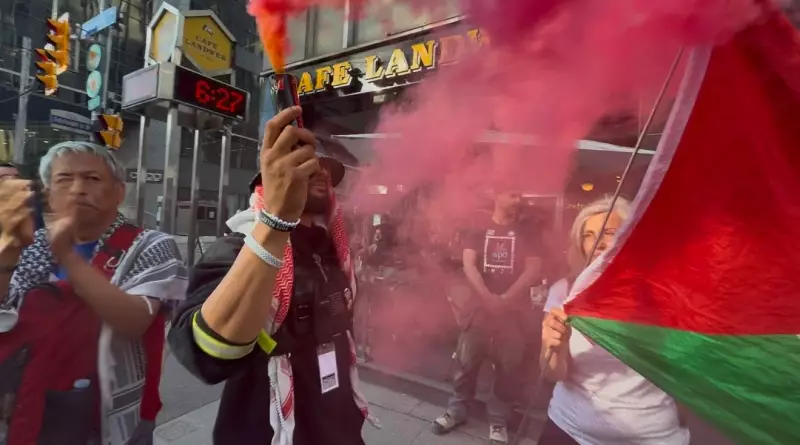
Major Jewish advocacy organization B'nai Brith Canada and a prominent Toronto city councillor are publicly supporting Ontario's Solicitor General in his push for Toronto Police to more rigorously enforce laws against hate, intimidation, and harassment at anti-Israel demonstrations.
Solicitor General's Letter Spurs Debate on Protest Enforcement
The move comes after Ontario Solicitor General Michael Kerzner sent a letter to Toronto Police on December 30, 2025, urging them to enhance enforcement of hate-motivated offences at protests. The letter has ignited a conversation about the balance between lawful protest and criminal activity in the city.
B'nai Brith Canada CEO Simon Wolle welcomed the intervention, stating that a lack of enforcement does a disservice to the community. "We welcome all action that is going to take the important steps to enforce hate, intimidation and harassment-motivated offences," Wolle said. He criticized using the Charter of Rights as a shield to avoid policing clear violations, arguing it creates a "permissive" environment for hateful protests.

Police Data Reveals Scale of Demonstrations
According to statistics provided by the Toronto Police Service, the city has been the scene of a significant wave of activism since the Hamas attacks on Israel on October 7, 2023. Police report that there have been:
- Nearly 800 protests, rallies, and demonstrations related to the conflict.
- Approximately 500 arrests made in connection to these events.
- More than 1,000 criminal charges laid, encompassing both protest-related offences and hate crimes.
This data forms the backdrop to the political and legal discussions about how to manage large-scale, recurring demonstrations.
Political Support and Civil Liberties Concerns
Toronto City Councillor Brad Bradford voiced strong support for the Solicitor General's stance, emphasizing the need for existing laws to be applied universally. "When you have Jewish schools shot at and you have Jewish schools firebombed, neighborhoods targeted because they are predominantly occupied by members of the Jewish community, that's a big problem," Bradford stated. He believes the situation has "gotten out of hand over the past 24 months" and requires a clear assertion of the law.
However, the call for increased police action has not been met without criticism. James Turk, director of the Centre for Free Expression at Toronto Metropolitan University, expressed concern about political overreach. "It's relatively strange for a solicitor general to be writing to a particular police force saying 'enforce the law more,'" Turk remarked. He suggested that, given the police's own reported enforcement actions, the letter could be seen as an inappropriate political intervention into operational policing.
The debate occurs alongside other municipal actions aimed at managing protests, including the City Council's introduction last year of a "bubble zone" bylaw that restricts demonstrations within 50 metres of schools and places of worship under specific conditions.