Windsor Police Reveal Inability to Arrest for Public Drug Consumption
In a startling revelation that has sparked significant controversy, Windsor police officers have confirmed they possess no legal authority to arrest individuals for openly consuming drugs in public spaces. Deputy Chief Kenneth Cribley delivered this news to Windsor City Council during a Monday meeting, explaining that officers can only request people to "move along" or cease their behavior when encountering public drug use.
Mayor's Outrage and Community Concerns
Mayor Drew Dilkens, who also chairs the Windsor Police Services Board, expressed profound frustration with the situation, stating emphatically, "I think this is bonkers, and this has to change." The mayor further emphasized that "there's no way in hell that this community can accept that" as a standard practice for public safety and order.
The discussion emerged during council deliberations about Windsor's Strengthen the Core initiative, a multimillion-dollar downtown revitalization strategy that began implementation two years ago. As part of this plan, Windsor police had increased downtown presence with 22 officers specifically assigned to the core area to enhance safety perceptions among residents and visitors.

Business Community Observations
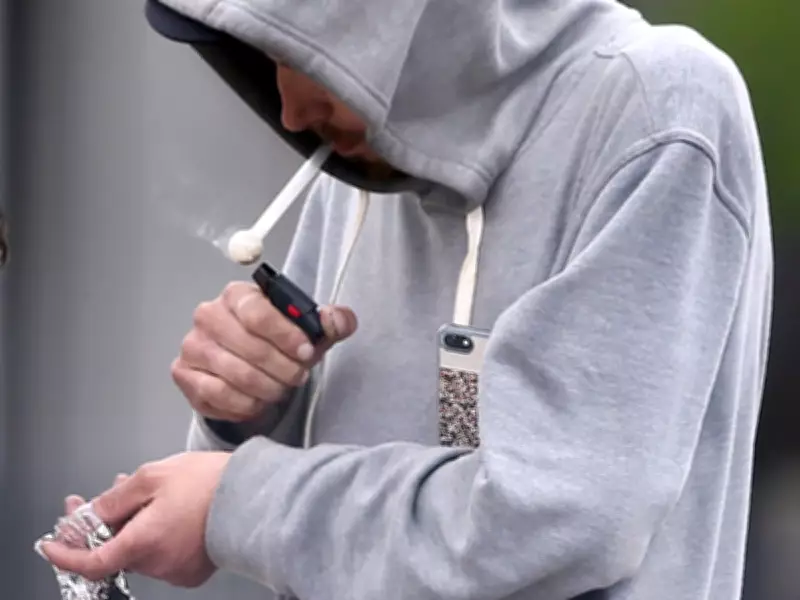
Chris MacLeod, chair of the Downtown Windsor Business Improvement Association, provided firsthand testimony to council members about witnessing four individuals using drugs on an Ouellette Avenue sidewalk earlier that same morning. "That's what people's perception of our downtown is," MacLeod stated. "That's what they see coming in and out every day. We can only do so much as a council and a BIA to change people's perception, but the reality of what they're seeing on display is not fair to the city."
MacLeod emphasized the dual injustice of the situation, noting it was "not fair to downtown, and it's not fair to those that are suffering" from addiction issues.
Legal Framework and Police Limitations
Deputy Chief Cribley explained that under Ontario's Restricting Consumption of Illegal Substances Act, which became law in 2025, police officers are explicitly prohibited from making arrests for public drug consumption. The legislation states that "no person shall consume an illegal substance in a public place," but only empowers officers to direct individuals to stop their behavior or move to another location.
"There is no arrest authority in that regard," Cribley clarified. If a person refuses to comply with an officer's direction, police can request identification and issue a summons, but cannot make an immediate arrest for the drug consumption itself.
Contrast with Other Offenses
Cribley drew a clear distinction between drug consumption and other public order offenses, noting that police "would not ignore" incidents like public urination. "The person would be trespassed or arrested or both," he stated regarding such behavior.
The deputy chief did acknowledge limited exceptions to the drug consumption rule, particularly in sensitive locations. "If someone was doing drugs in or near a school yard, that would be deemed to be egregious behavior," Cribley explained, noting that in such circumstances, the Crown's office would proceed with charges. However, for individuals using drugs "on a park bench, on a side street, or along a sidewalk, it's not an arrestable offense."
Community Reaction and Broader Implications
Ward 3 Councillor Renaldo Agostino, who represents Windsor's downtown area, described learning about the police limitations as a "Wow! moment" for the community and a "WTF moment for this entire country." The councillor's strong reaction underscores the broader implications of what many perceive as a significant gap in public safety enforcement.
Resident Wayne Craig added to the concerns, telling council about witnessing an individual "throwing things and urinating on a bench downtown" – behavior he believes undermines the otherwise "good effort" of the Strengthen the Core revitalization initiative.

Judicial Context and Future Considerations
Cribley attributed the current situation to judicial developments, explaining that courts overseeing drug prosecutions "have all but decriminalized simple possession use." This legal landscape has resulted in Windsor police no longer arresting people who consume drugs in plain view, despite the visible impact on public spaces and community perceptions.
Mayor Dilkens summarized the frustration felt by many, stating, "It's unfortunate we've depowered police in many ways to do what is right, I would submit." The revelation has sparked renewed debate about balancing public safety, addiction treatment approaches, and urban revitalization efforts in Windsor and potentially across Ontario.