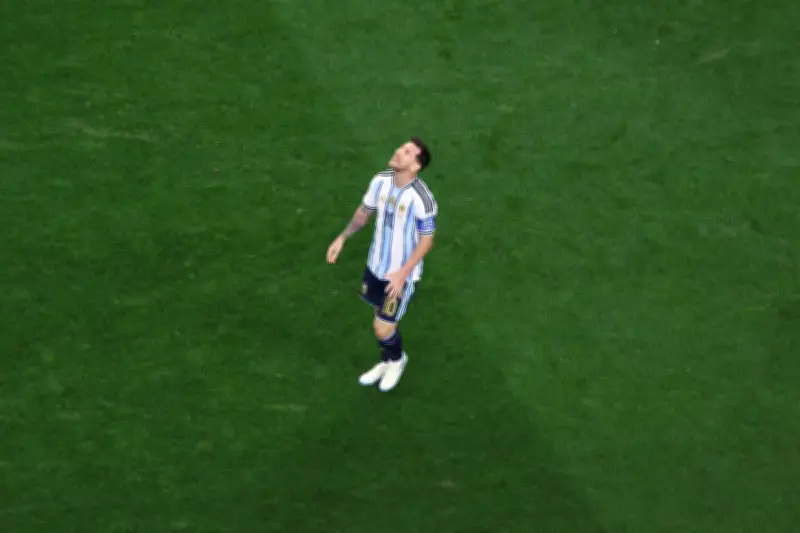
Lionel Messi etched his name further into soccer history on Monday, scoring his 17th World Cup goal to break the all-time scoring record during Argentina's Group J match against Austria in Arlington, Texas. The milestone came in the first half of the game, which was part of the 2026 World Cup hosted across North America.
Record-breaking moment
Messi's goal surpassed the previous record held by Germany's Miroslav Klose, who scored 16 goals across four World Cups. The Argentine captain, playing in his fifth World Cup, achieved the feat with a clinical finish after a pass from teammate Ángel Di María. The goal was Messi's 17th in World Cup competition, a mark that now stands alone.
The 39-year-old Messi, widely regarded as one of the greatest footballers of all time, had already broken several records earlier in the tournament, including most appearances and most assists. His latest achievement adds to a storied career that includes a World Cup title in 2022.

Match context
Argentina entered the match against Austria needing a win to secure top spot in Group J. The game was played at AT&T Stadium in Arlington, Texas, in front of a crowd of over 80,000 fans. Messi's goal came in the 23rd minute, giving Argentina a 1-0 lead. The match was still ongoing at press time.
According to match statistics, Messi has now scored in 11 different World Cup matches, tying another record held by Brazil's Pelé and Germany's Uwe Seeler. His 17 goals have come from 80 shots on target across 26 World Cup appearances.
Reaction and impact
"It's an incredible feeling to achieve this record," Messi said after the goal, according to Argentine media. "I want to thank my teammates and the fans for their support. This is for all of Argentina."
The record-breaking goal was met with a standing ovation from fans, including many Austrian supporters who acknowledged the historic moment. Argentina coach Lionel Scaloni praised Messi's longevity, saying, "He continues to amaze us. What he has done for football is unmatched."
Messi's record comes as the World Cup expands to a 48-team format, with matches spread across the United States, Canada, and Mexico. The tournament has seen several upsets and standout performances, but Messi's achievement has dominated headlines.