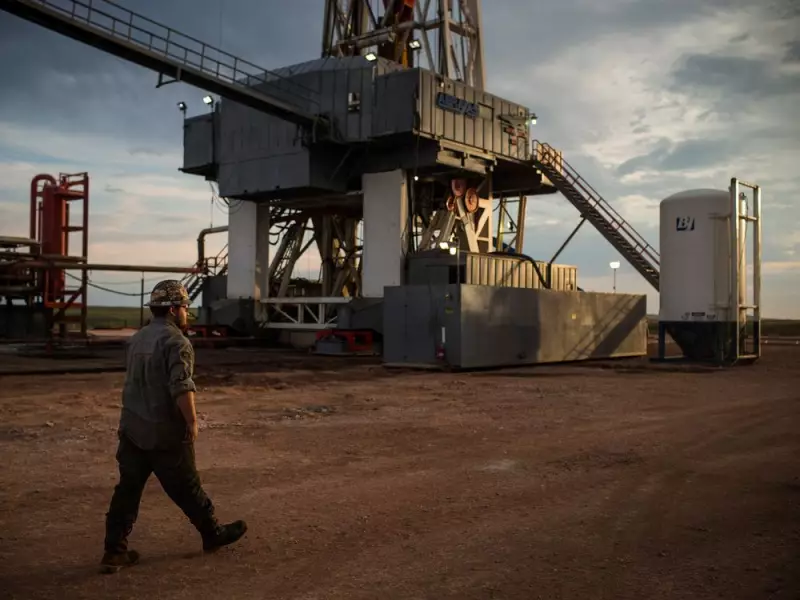
In a significant move for the North American energy landscape, billionaire oil tycoon Harold Hamm announced he will suspend drilling operations in the prolific Bakken shale formation of North Dakota. This marks the first such halt in over three decades for the man credited with helping launch the U.S. shale revolution.
The End of an Era in the Bakken
Harold Hamm, the founder and key figure behind shale driller Continental Resources Inc., revealed the decision in a telephone interview on Thursday, January 16, 2026. "This will be the first time in over 30 years that Harold Hamm has not had an operation with drilling rigs in North Dakota," Hamm stated bluntly. He attributed the pause to evaporating profit margins, adding, "There's no need to drill it when margins are basically gone."
The Bakken holds profound historical significance for Hamm and the industry. It was there, in North Dakota, where the 80-year-old wildcatter first successfully proved that advanced drilling and hydraulic fracturing techniques could unlock vast, previously inaccessible oil reserves. This breakthrough catalyzed the fracking revolution, propelling the United States to become the world's top oil producer.

Economic Squeeze Forces Industry Pullback
The decision is a direct response to a sustained decline in global oil prices coupled with rising operational costs. According to a recent BloombergNEF report, the average well in the Bakken now requires a minimum of US$58 per barrel just to cover costs and generate a modest profit. This breakeven point has climbed almost four per cent from a year ago, largely due to escalating expenses for drillers.
Meanwhile, the market has moved in the opposite direction. Anticipation of a supply glut has driven prices down steadily over recent months. The U.S. benchmark, West Texas Intermediate (WTI), settled at US$59.19 on the day of Hamm's announcement, reflecting a steep 26 per cent decline over the past year.
Hamm's company is not alone in scaling back. Industry-wide data shows the total number of active drilling rigs across the United States has fallen by 15 per cent over the last year. The most significant cuts have occurred in the Permian Basin of Texas and New Mexico, the nation's largest oil field, which has seen 60 rigs idled.
Industry-Wide Reassessment
"A lot of people are assessing their activity in all the basins," noted Hamm, whose company also holds substantial oilfield assets in Oklahoma and Texas. His comment underscores a broader trend of caution and capital discipline sweeping across the U.S. shale sector as companies grapple with volatile economics.
Despite the halt, Hamm left the door open for a potential return to the Bakken, framing the decision as a pragmatic, price-dependent pause rather than a permanent exit. "We're price takers, as you're aware — not price makers," he remarked with a laugh. "See what we can get." This sentiment highlights the shale industry's ongoing vulnerability to global commodity price swings, even for its most influential pioneers.
The suspension of drilling by a foundational figure like Harold Hamm serves as a potent symbol of the current challenges facing North American shale producers. It signals a potential shift from the relentless growth model of the past decade to a more measured, profit-focused approach in an uncertain market.