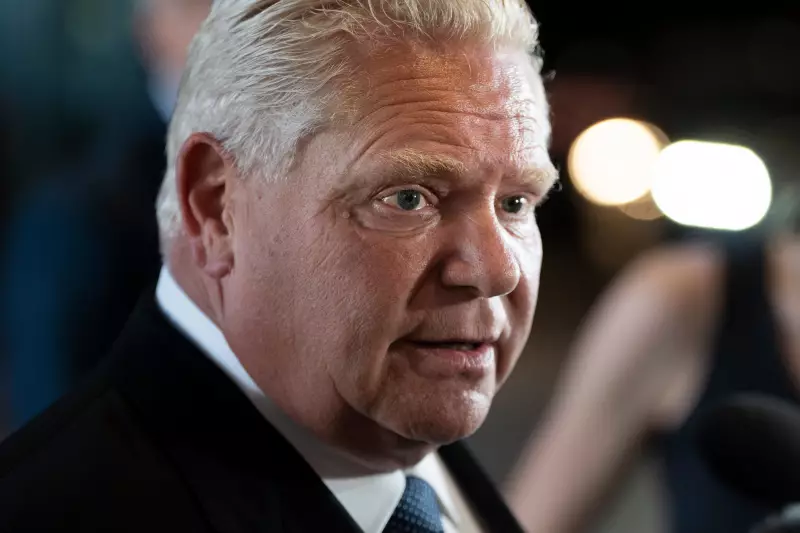
Ontario Premier Doug Ford has launched a sharp critique against a significant new trade agreement negotiated with China, asserting it will harm Canadian employment. The deal, involving electric vehicles and canola, was announced by federal officials.
Details of the Landmark China Agreement
The federal government, under the guidance of figures including Mark Carney, has reached what it calls a "landmark" tariff-quota arrangement with China. The pact specifically covers key exports: electric vehicles (EVs) and canola. While the full technical details were not disclosed in the initial report, such agreements typically set limits on tariffs for a certain volume of goods, aiming to facilitate trade.
Premier Ford's criticism centers on the potential impact for Ontario's and Canada's industrial workforce. He argues that facilitating easier access for Chinese EVs into the Canadian market could undermine domestic manufacturing and the jobs it supports. His statement, issued on January 16, 2026, framed the deal as a direct risk to local employment.

Ford's Defense of Canadian Workers
In his remarks, Ford positioned himself as a defender of Canadian industrial interests. "We're not leaving any stone unturned," he stated, echoing a phrase used in other policy contexts, to emphasize his commitment to protecting jobs. His core accusation is that the economic benefits of the agreement with China will be realized "at the expense of Canadian workers."
This criticism taps into ongoing debates about economic sovereignty, the future of the automotive sector in the transition to electric vehicles, and how Canada balances international trade partnerships with domestic job protection. The Premier's stance highlights the political tensions between provincial and federal approaches to economic and trade policy.
Broader Context and Implications
The deal emerges amidst a global scramble for position in the EV market. For Canada, a major canola exporter, the agricultural component of the deal is also significant. However, Ford's focus remains squarely on the automotive implications for Ontario, the heart of Canada's traditional auto manufacturing.
The Premier's vocal opposition sets the stage for potential political friction. It raises questions about how the benefits of international trade are distributed and who bears the costs during periods of industrial transformation. The outcome of this agreement and its real-world impact on both the EV market and Canadian employment will be closely watched by industry stakeholders and policymakers alike.