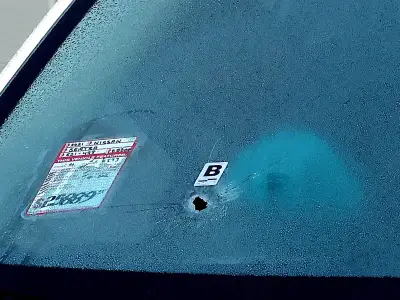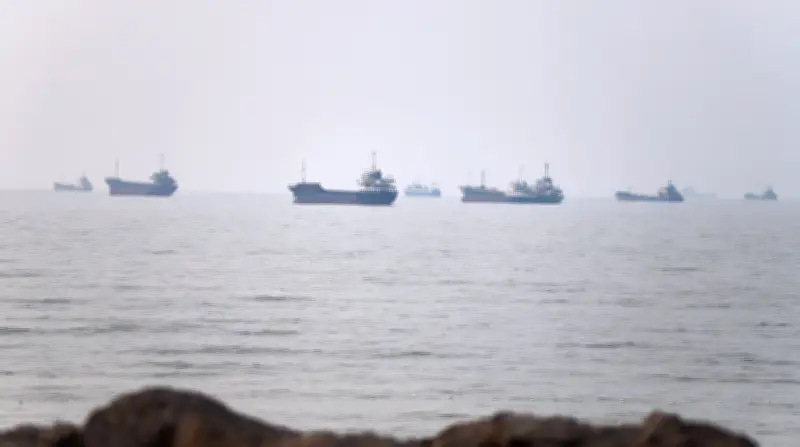
The U.S. military carried out a series of strikes against Iranian targets early Wednesday, hours after three merchant ships were struck by projectiles in the waters off Oman, according to U.S. Central Command. In a statement, Central Command said the strikes were intended “to impose heavy costs for targeting and attacking commercial shipping crewed by innocent civilians in an international waterway,” calling Iran’s actions “unwarranted, dangerous, and a clear violation of the ceasefire.”
Three Tankers Struck in One Day
The British military confirmed that three tankers were hit Tuesday in the Strait of Hormuz, the most in a single day since late April, according to the U.N. International Maritime Organization. One tanker traveling off the coast of Oman was struck and caught fire, the United Kingdom Maritime Trade Operations center reported. Iranian state television said the liquefied natural gas tanker ignored warnings but did not directly claim responsibility. The other two ships sustained some damage, but no injuries were reported, and both continued their voyages.
Location details from the U.K. agency indicated all three attacks occurred off Oman or the United Arab Emirates, suggesting the ships were using the route near Oman rather than the Iranian-controlled channel. Tehran has repeatedly declared that only its approved route is safe and is suspected of targeting vessels using alternative paths.

U.S. Revokes Iranian Oil License
Hours after the attacks, the United States revoked a 60-day license issued last month by the Treasury Department that waived sanctions on Iranian oil, according to a U.S. official who spoke on condition of anonymity. The official said the license was revoked because Iran’s actions in the strait were unacceptable and required consequences. The license had authorized the production, delivery, and sale of Iranian oil through Aug. 21. U.S. Vice President JD Vance had previously described lengthy talks with senior Iranian officials in Switzerland as creating a “good foundation for a successful final deal” to end the war.
U.S. sanctions on Iranian oil have been in place since the 1979 Iranian Revolution. After the U.S. and Israel launched the war and the strait was closed, the U.S. had authorized temporary oil sales at least twice as an incentive toward a deal. The Iranian mission to the United Nations did not immediately comment.
Negotiations on Hold After Khamenei’s Death
Talks between Iran and the U.S. appeared to be on hold until after the burial of Iran’s Supreme Leader Ayatollah Ali Khamenei, who was killed at the beginning of the war. Khamenei’s body was flown to the Shiite seminary city of Qom, where hundreds of thousands of mourners gathered Tuesday for funeral services at Jamkaran Mosque, according to Iranian state television. His son, Iran’s new Supreme Leader Ayatollah Mojtaba Khamenei, has not appeared at ceremonies, believed to be in hiding after reportedly being wounded in the airstrike that killed his father.
Khamenei’s body later arrived in Najaf, Iraq, where senior officials from both countries received it. Processions are planned for Wednesday in Najaf and Karbala, two holy cities of Iraqi Shiism. He will be returned to Iran for burial Thursday at the Imam Reza shrine in Mashhad, his birthplace.
Qatar Condemns Attack
Majed Al-Ansari, a spokesperson for the Qatari Foreign Ministry, said the Qatari tanker Al Rekayyat was targeted in an “unacceptable attack” on international navigation and global energy security, calling it a “serious and explicit violation” of international law. In a social media post, he said Qatar holds Iran “fully legally responsible.”
The Joint Maritime Information Center, a multinational body overseen by the U.S. Navy, told shippers Monday that the route around Oman “has been expanded and remains available for all traffic.” Ships using the northern Iranian route must register with Tehran, while those going south work with Oman and the U.S. Under an interim deal, Iran and the U.S. agreed to allow passage without fees for 60 days, but Tehran insisted on controlling routes and later charging fees, which Gulf states and the U.S. reject.

Data firm Kpler reported that at least 108 ships crossed the strait last weekend using various routes. In peacetime, a fifth of all traded oil and natural gas passed through the channel.