Chris Kerr, a Calgary-born concert producer with over two decades in the industry, has thrown his support behind city council's recent decision to enforce tighter noise limits on outdoor events, arguing that the core problem is not the decibel level but a breakdown in communication and trust between event organizers and nearby residents.
Noise Complaints and Council's Response
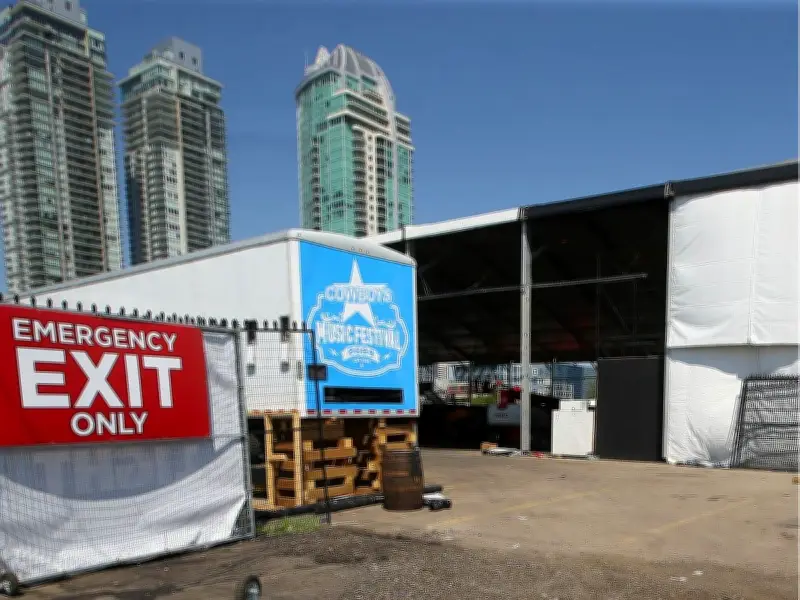
Last year, the Cowboys Music Festival drew significant noise complaints from residents in the area. The local city councillor said those complaints did not receive an appropriate response, prompting council to hold the line on stricter noise regulations. The move led to the cancellation of a festival and drew criticism from the premier, who labeled the council the "fun police."
Kerr, who has worked on production teams for Badlands and Stampede party tents and runs a licensed security agency now in its 22nd year, said the situation was never about the specific decibel numbers. "When the events and the people who live nearby aren't productively talking to each other, the city has to step in as the tiebreaker, and then no one feels it is fair," he wrote in an opinion piece for the Calgary Herald.

Historical Context of Event Licensing
Kerr noted that until 2017, Alberta's special-event liquor licence capped events at four days and required a major venue. A 10-day stand-alone music tent could not legally exist, so organizers worked around the rules by licensing it as an existing bar's patio—the method used by Cowboys since the late 1990s.
By 2019, both clauses were removed and replaced with a risk-assessment model. Then the COVID-19 pandemic hit, and when events returned, the regulatory landscape had shifted. "If you have wondered why there are so many more tents than there used to be, that timing is most of the answer," Kerr said. The focus moved from liquor licensing to noise, creating the current conflict.
Responsibility Lies with Producers
Kerr emphasized that the responsibility to address noise complaints falls on concert producers, not council or neighbours. "The standard moved and the industry was slow to catch up. Responsibility once stopped at the fence line. It no longer does," he said.
He described the blocks around the event fence line as now being part of the event itself. "We share the responsibility for it. We don't always get it right, but we learn and adapt. Almost every outdoor show takes complaints; what matters is whether we react quickly enough today, and build remedy into next year's plan," he added.
A Call for Better Communication
Kerr argued that noise issues are a symptom of a deeper problem: a lack of direct communication between event organizers and residents. "A 1 a.m. bass line matters to the family three blocks away, and I won't pretend otherwise. There is loud and there is too loud, and on a show site, we know the difference the moment we cross it. So does the bylaw officer with the meter," he wrote.
He concluded that the answer does not lie with council or neighbours but with concert producers. "We are the ones with our hands on the faders," he said, urging the industry to proactively manage noise and rebuild trust with the community.